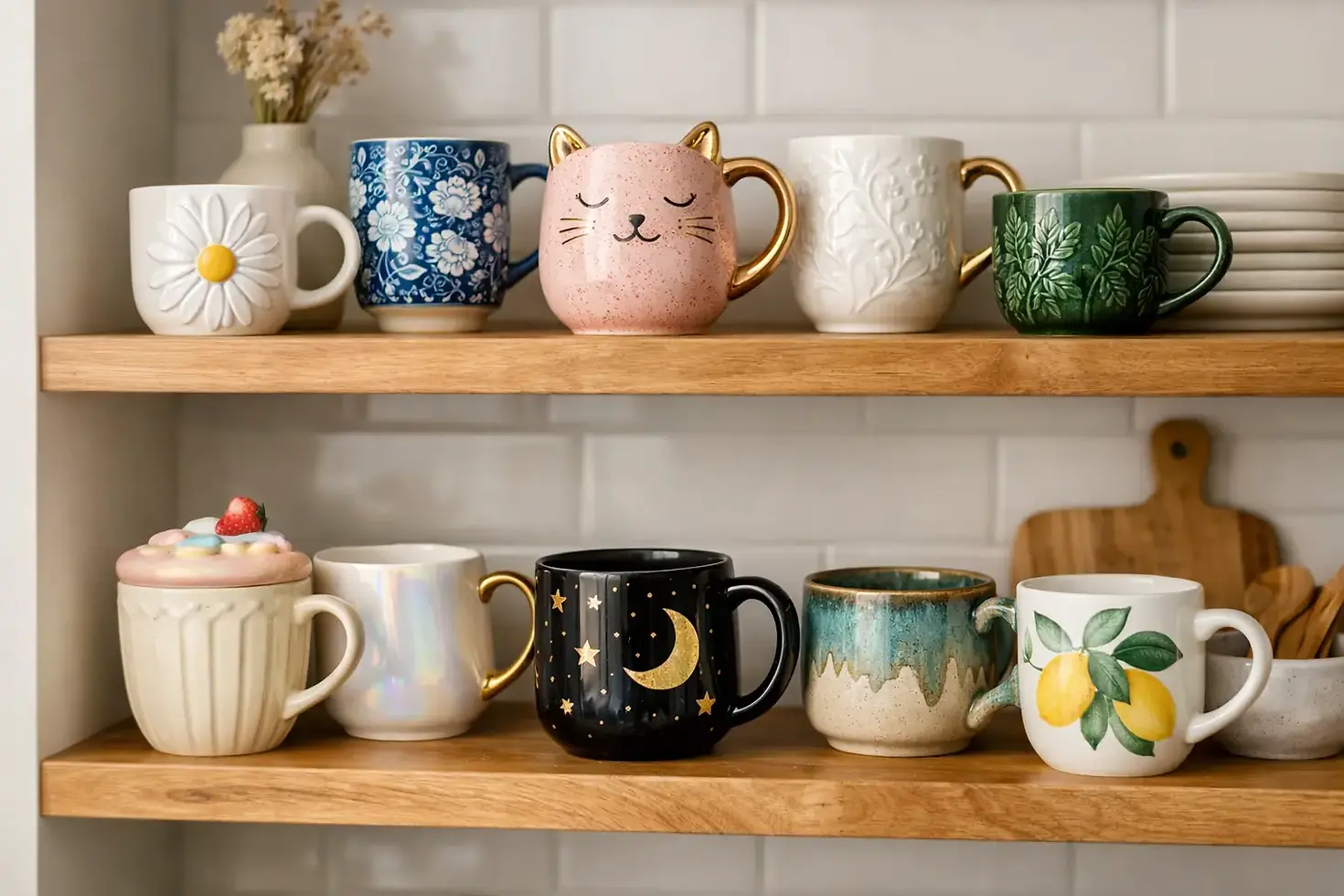
Decorative Mugs for Kitchen Shelves That Shine

A favorite mug should not disappear into a dark cabinet. Decorative mugs for kitchen spaces can turn an open shelf, coffee station, or countertop into a small, personal composition - one that looks considered in the morning and feels useful when the kettle starts to sing.
The best styling is not about filling every available inch. It is about choosing pieces with presence: a clean ceramic silhouette, a soft neutral glaze, an unexpected handle, or a color that gives the room a little warmth. When each mug earns its place, the kitchen feels more welcoming without feeling crowded.
Start with the mood of your kitchen
A mug collection looks most elevated when it belongs to the room around it. Begin by noticing the finishes already in your kitchen. White cabinets, pale wood, matte black hardware, warm brass, stone counters, and colorful tile each suggest a different direction.
For a minimal contemporary kitchen, choose mugs in ivory, sand, charcoal, soft gray, or muted black. A consistent palette gives open shelving a calm, premium look, while slight variations in shape and glaze keep it from becoming flat. Think rounded stoneware beside a straight-sided ceramic cup, rather than six identical pieces lined up with no visual rhythm.
If the kitchen has warmer, more eclectic character, decorative mugs can introduce richer tones. Terracotta, olive, deep blue, and sun-washed yellow bring a handmade feeling to wood shelves and natural textures. A single patterned or illustrated mug can add personality, but it works best as an accent, not the entire story.
It depends on how visible the display will be. Mugs above the coffee maker can be more playful because they are part of a daily ritual. Mugs on a prominent open shelf should usually relate more closely in color, material, or shape so the display still feels intentional from across the room.
Decorative mugs for kitchen shelves need a point of view
A shelf full of mugs may be practical, but a shelf with a point of view becomes decor. Instead of arranging every mug you own, select a small edit that reflects the mood you want to create. Four to eight pieces are often enough for a compact shelf, depending on their size and the room around them.
Keep the visual weight balanced. If you place a large, dark ceramic mug on one side, answer it with another substantial piece or a small stack on the other. This does not mean the arrangement needs to be symmetrical. A little imbalance can feel more natural, especially when softened by a canister, a small tray, or a framed print nearby.
Handle direction matters more than most people expect. Turn handles in a similar direction for a polished, boutique-like look, or alternate them gently for a more relaxed arrangement. What tends to look messy is random overlap, where handles collide and the silhouettes lose definition.
Stack only when the mugs are designed for it and the glaze is durable enough to handle regular contact. Stacking saves space and creates height, but it can hide beautiful details and may leave marks on delicate finishes. If a mug has a sculptural handle, metallic detail, or hand-finished surface, give it room to be seen.
Use repetition without making it look uniform
The most inviting displays repeat an element rather than duplicate every piece. You might repeat a creamy glaze across different forms, use the same style of handle in two colors, or pair matching cups with one contrasting statement mug. This is the difference between a collection and a crowded cabinet.
A simple formula works well: anchor the display with two or three neutral everyday mugs, add one or two colored pieces for depth, then finish with a design that feels personal. That final mug could be a gift, a seasonal favorite, or a piece chosen simply because it makes the first coffee of the day feel better.
Create a coffee station that works hard and looks polished
Decorative mugs earn their keep when they are close to where you use them. A coffee station is the natural home for a curated selection, whether it is a dedicated counter corner, a bar cart, or one shelf near the espresso machine.
Place the mugs where they are easy to reach, then build the styling around that practical need. A compact organizer can keep handles from tangling and free up counter space. A tray beneath sugar, spoons, and a small jar of coffee grounds creates a clean visual boundary, especially in a busy kitchen.
Avoid turning the station into a display that cannot be touched. The goal is everyday elegance, not a museum shelf. Keep your most-used cups at the front, and reserve more delicate, seasonal, or gift-worthy designs for a higher shelf or a less active corner.
Materials also affect the experience. Ceramic mugs offer the tactile weight and warmth many people want for slow morning coffee. Stainless steel or insulated styles are better for long commutes, desk days, and drinks that need to stay hot, though they create a more modern, utilitarian look. Both can belong in the same kitchen if they are stored according to purpose rather than forced into one display.
Let color create a seasonal shift
You do not need to redecorate the kitchen every few months. A few decorative mugs can refresh the room with very little effort. In spring and summer, lighter glazes, botanical motifs, and soft pastels feel airy against bright counters. In fall and winter, deeper tones, textured ceramics, and warm neutrals make a coffee corner feel more grounded.
The trade-off is storage. If your kitchen is short on cabinet space, avoid buying a full seasonal set. Choose one or two special mugs that can rotate into your everyday group. A single festive design beside timeless cream or black ceramics feels more refined than an entire shelf that only works for a few weeks each year.
Color-changing mugs can also bring a small element of surprise to the routine. They are especially charming for gifts and personal desks, though they are often better treated as a feature piece than the foundation of a carefully minimal display.
Make room for sentiment
Some mugs deserve display because of what they mean, not because they match perfectly. A retirement gift, a profession-themed design, a travel souvenir, or a cup from someone you love can add genuine character to the kitchen.
The key is editing. One sentimental piece becomes a conversation starter. Ten unrelated novelty mugs can make even a beautiful kitchen feel visually noisy. Give meaningful pieces space, and pair them with quieter forms that let their story come through.
This approach also makes mugs an easy, thoughtful gift. A well-chosen design is useful from the first day, but it can also become part of someone’s home ritual for years. Look for a shape that fits their habits, a finish that reflects their style, and a message or motif that feels specific rather than generic.
Protect the finish so the display stays beautiful
A decorative mug should look as good after regular use as it did on the shelf. Check care instructions before putting specialty glazes, metallic accents, or color-changing designs into the dishwasher or microwave. Convenience matters, but a premium finish may call for a little more attention.
Give each mug enough breathing room to prevent chips at the rim and handle. If shelf surfaces are slick, a discreet liner can reduce sliding and protect both the mug and the cabinet. For frequently used ceramic pieces, a quick rinse after coffee or tea helps prevent stains from settling into lighter interiors.
Choose quality over quantity whenever possible. A smaller collection with satisfying weight, comfortable handles, and a finish you enjoy touching will always feel more luxurious than a cabinet full of cups that never get used. JustMug collections are designed around that balance: visual character for the shelf, practical comfort for the moment you actually sit down with your drink.
The right mug display should make the kitchen feel more like yours, not more difficult to maintain. Start with the cups you reach for most, add one piece that makes you smile, and leave enough open space for the room to breathe.

Comments