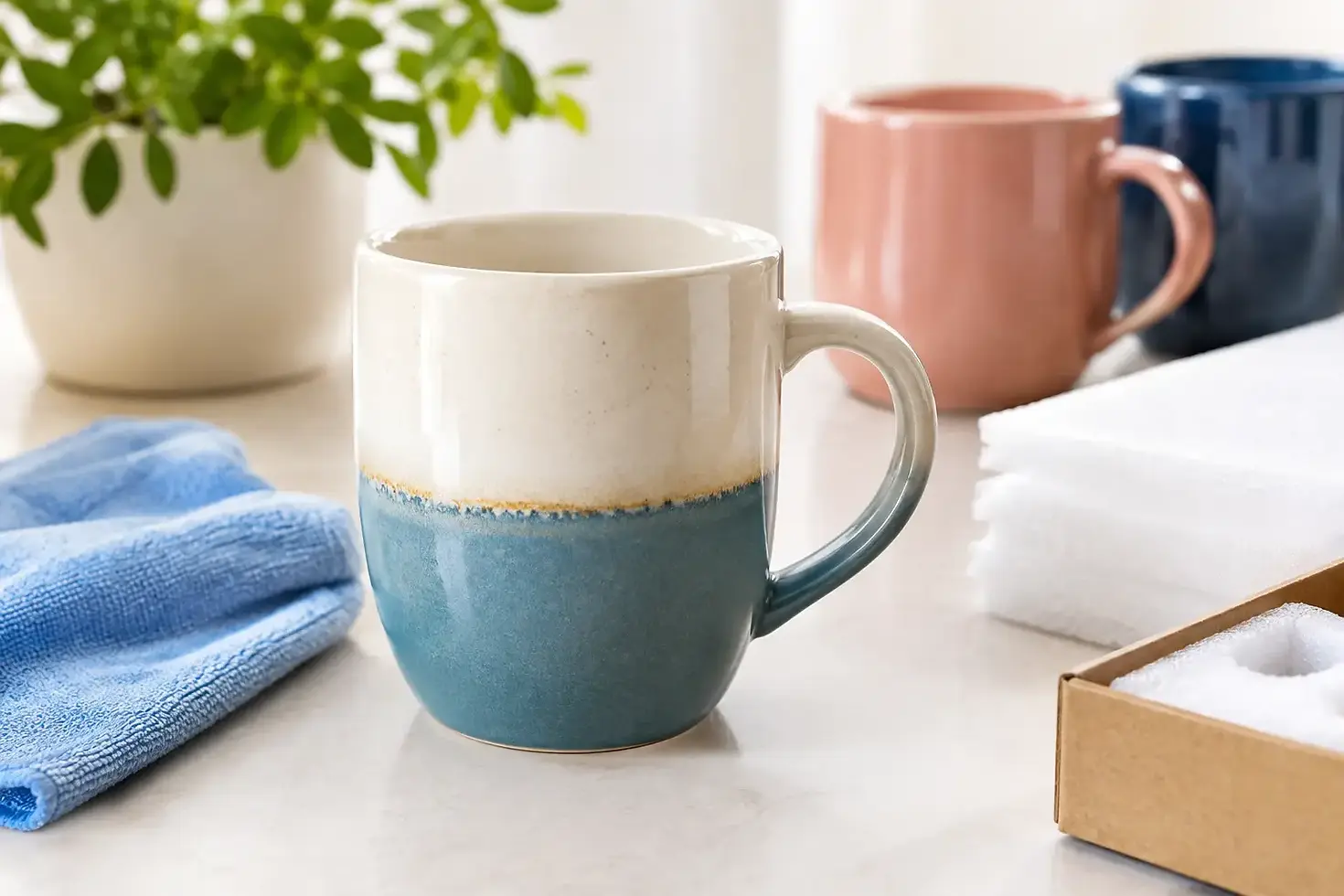
How to Prevent Mug Chips and Keep Favorites Beautiful

A chipped rim can change the feeling of a favorite mug in one careless second. Whether it is the ceramic cup that anchors your home-office coffee ritual or a thoughtful gift displayed on an open shelf, learning how to prevent mug chips protects both its finish and its place in your daily routine.
Mugs are made for comfort, but ceramic is still a hard, brittle material. Most chips do not come from dramatic drops. They happen when a mug taps a faucet, knocks against another cup in the cabinet, or meets the edge of a stone countertop. A few intentional habits make a visible difference, helping your collection stay polished, presentable, and ready for every refill.
Why Mugs Chip So Easily
Ceramic has a refined, substantial feel, which is part of its appeal. Yet that same rigid structure does not absorb impact well. When a mug strikes a harder surface, such as granite, metal, glass, or another ceramic piece, the force concentrates at vulnerable points. The rim, handle connection, and base are especially likely to chip.
Glazed ceramic may look smooth and durable, but the glaze is a finish, not armor. A small impact can fracture it, exposing the ceramic beneath. Once a tiny chip appears, repeated washing and handling can make the damaged area more noticeable.
Not every mug requires identical care. A lightweight decorative mug may need more protection than a thick diner-style cup. Handmade ceramics can also have subtle variations in thickness, making gentle handling particularly worthwhile. The goal is not to treat every mug as untouchable. It is to remove the routine risks that add up over time.
How to Prevent Mug Chips at Home
The best protection begins where mugs spend most of their time: in the cabinet, on the counter, and beside the sink. Create a setup that keeps hard surfaces and crowded stacks from working against your favorite pieces.
Give every mug its own space
Avoid stacking ceramic mugs inside one another unless the design clearly allows it and there is enough room between the rims. Nested mugs may save shelf space, but even slight movement can rub or knock the glaze. If your cabinet is tight, arrange mugs in a single layer with handles facing the same direction.
A mug rack or organizer is a practical option for frequently used cups. It keeps each piece visible, easier to reach, and less likely to collide with its neighbors. This is especially useful for statement mugs, color-changing styles, and giftable designs you want to keep looking fresh.
If you prefer open shelving, leave a little breathing room between pieces. A curated shelf looks more elevated when each mug has visual space, and it is safer too. Reserve the highest shelves for lighter or less frequently used mugs so you are not stretching for a heavy ceramic piece every morning.
Protect the countertop moments
Kitchen counters are a common source of chips because many are harder than ceramic. Stone, quartz, tile, and concrete can damage a mug when it is set down too quickly. A cork coaster, linen placemat, or small tray softens that contact while adding a considered touch to a coffee station.
Be mindful near the sink as well. Do not place a mug directly against the faucet, disposal switch, or edge of the basin. When filling it with water, hold it securely rather than letting it rest beneath the faucet where it can swing into metal. A silicone sink mat is a small upgrade that can cushion accidental contact during washing.
Carry one mug at a time when possible
It is tempting to gather several mugs in your arms after breakfast, but handles can catch, cups can knock together, and one slip can affect the entire group. Carrying one or two at a time is the quieter, safer choice, especially on hardwood floors or near tile.
When holding a hot drink, use the handle rather than gripping the rim. This keeps fingers away from heat and reduces the chance of squeezing or bumping the cup as you move. For larger mugs, support the base with your other hand when walking from kitchen to desk.
Wash Mugs With Less Risk
Dishwashers can be convenient, but loading technique matters more than most people realize. The main risk is not simply water pressure. It is the repeated contact between mugs, plates, utensils, and the dishwasher rack during a wash cycle.
Place ceramic mugs securely on the top rack whenever the manufacturer recommends it. Leave space around each one so it does not touch another mug or a plate. Angle handles inward if that helps prevent them from catching on the rack or nearby items. Do not force a tall mug into a space where it presses against the top sprayer or cabinet-like rack structure.
Hand-washing is often gentler for a special ceramic mug, particularly one with metallic details, a reactive glaze, or a delicate decorative finish. Use a soft sponge rather than an abrasive scouring pad. Hold the mug over the basin instead of washing it against the sink wall, and set it on a folded dish towel to dry rather than directly on a hard counter.
Temperature changes deserve attention, too. Extreme shifts can stress ceramic and weaken a finish over time. Do not pour boiling liquid into a mug that has just come from a cold garage, refrigerator, or winter porch. Let it return closer to room temperature first. The same care applies after washing: allow a very hot mug to cool naturally rather than rinsing it immediately with cold water.
Choose the Right Mug for the Moment
Prevention also comes down to matching the mug to the setting. A beautiful ceramic piece is ideal for coffee at your desk, tea on the sofa, or a calm morning at home. For a commute, outdoor use, or a busy workspace with hard floors, a stainless steel tumbler or thermal mug may be the more practical choice.
This is not about keeping ceramic hidden away. It is about letting each piece do what it does best. A premium ceramic mug brings warmth, color, and personality to everyday rituals. A travel-ready vessel handles movement and impact with more ease. Choosing thoughtfully helps both last longer.
For households with children, pets, or limited cabinet space, durability should be part of the purchase decision. Look for mugs with a balanced base, a comfortable handle, and a shape that feels stable in your hand. Wide, low-profile designs can be less likely to tip than tall, narrow ones, although they may take up more shelf space.
What to Do When a Mug Gets a Small Chip
A tiny chip does not always mean a mug must be discarded immediately. If the damage is on the exterior base and the surface is smooth, it may still work as a decorative holder for pens, small utensils, or a compact plant. It can continue adding character to a shelf without being used for beverages.
A chip on the rim, inside surface, or handle is different. These areas come into direct contact with your mouth, hands, and hot liquids. Sharp edges, exposed material, or a compromised handle make the mug less suitable for drinking. Do not try to cover a food-contact chip with ordinary craft glue or paint. Most household repair materials are not designed for repeated contact with heat, moisture, and beverages.
For a sentimental mug with minor exterior damage, consider displaying it rather than risking further wear. A well-loved cup can become part of a personal collection, a small reminder of a trip, a celebration, or the person who gave it to you.
Build a More Considered Mug Routine
The easiest way to preserve a mug is to make care feel effortless. Keep coasters near your coffee machine, leave a soft drying mat by the sink, and organize your cabinet so no mug has to be wrestled from a crowded stack. These details bring order to the kitchen while protecting the pieces that make it feel personal.
At JustMug, a mug is more than drinkware. It is a small expression of taste, comfort, and daily rhythm. Treating it with a little care keeps that experience intact, from the first quiet coffee of the day to the final cup of tea at night.
A beautiful mug does not need to live behind glass. Give it space, handle it with intention, and let it become part of your routine without sacrificing the finish that made you choose it in the first place.

Comments